
Rain is the salt pool's slow leak
From late spring into fall, Stuart gets the classic afternoon pattern: heat building over the St. Lucie River and the coast, then a downpour that can drop a lot of water in a short time. Rainwater has no salt in it. When it lands in a salt pool, the level rises, the excess spills over or gets pumped off, and that excess carries salt out with it. Repeat that through a wet summer and the salinity can slide well below where the cell was set up to run.
Most salt systems respond to low salinity by producing less, posting a warning, or shutting down production altogether to protect the cell. Meanwhile the same storms are washing leaves, pollen, and organic debris into the water, which raises chlorine demand right as supply is dropping. That combination is one of the reasons a Stuart salt pool can go from clear to cloudy within a few days in August.
How we manage the wet season
Our weekly routine for Stuart salt pools gets more attention to dilution between June and October:
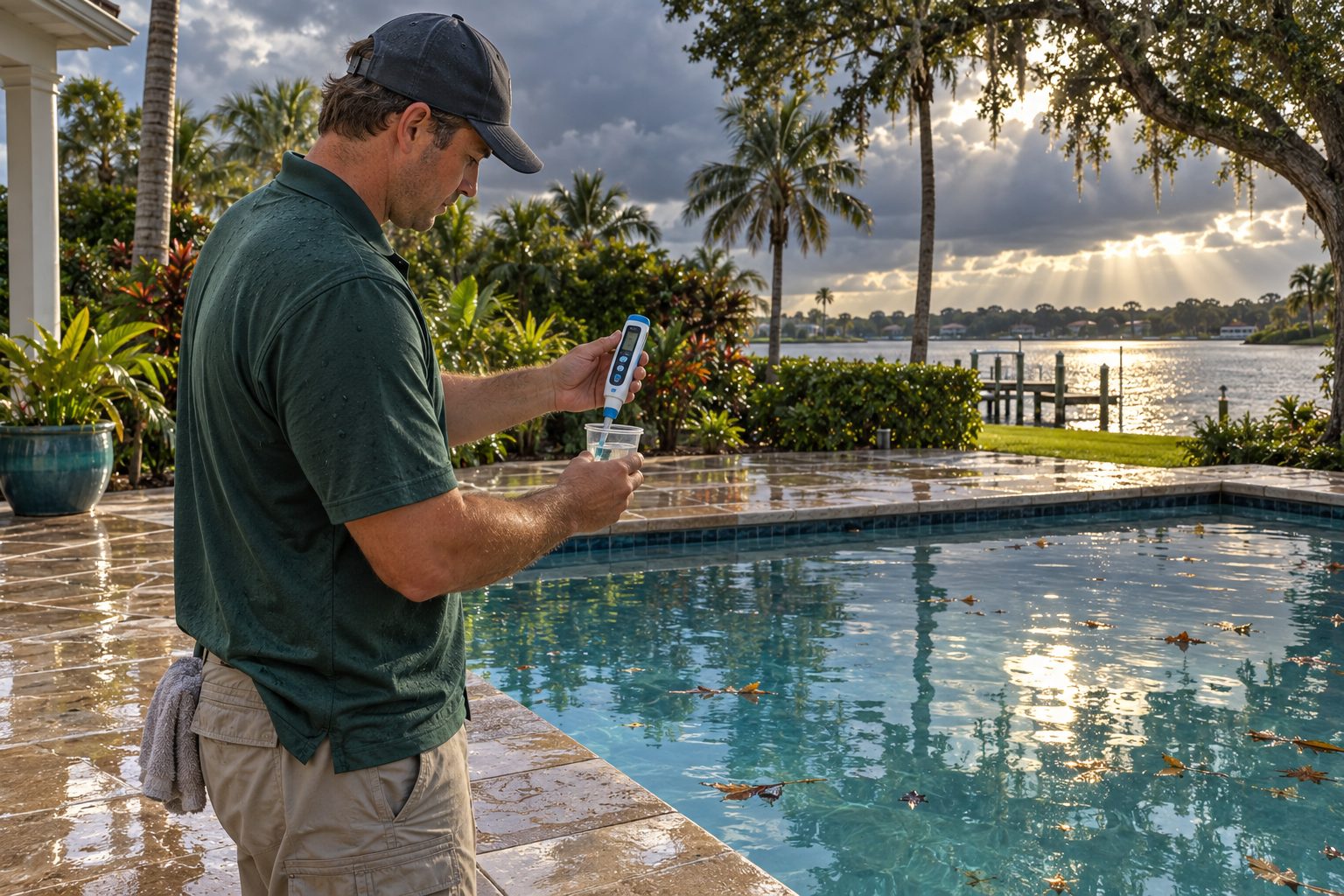
- Salinity tested every visit, with our own meter, so we catch a downward trend before the cell stops producing.
- Water level managed thoughtfully. If the pool is overfull after a storm, lowering it helps the skimmers work, and we account for the salt that leaves with that water.
- Salt added in measured amounts, based on the tested shortfall and the pool's volume, rather than whole bags on a guess.
- Stabilizer watched too. Heavy rain and overflow dilute stabilizer along with salt, and low stabilizer leaves chlorine exposed to the strong summer sun.
- pH and alkalinity rebalanced after rain events, since storms and fresh water can push both around in either direction.
- Debris cleared from baskets and the pool, so organic material does not consume what chlorine the cell is making.
If a storm leaves the pool needing more than a normal visit can handle, we tell you what it needs and quote anything outside routine service before doing it.
When low output is not about the rain
Rain is the usual explanation in summer, but not the only one. A cell that stays weak after salinity is corrected may be scaled, near the end of its life, or limited by poor flow from a loaded filter. Under Stuart's tree canopy, filters often carry a heavy load in storm season, and restricted flow can cut the water reaching the cell. We look at filter pressure, return flow, and cell condition before concluding anything. Pools that sit open to the river breeze, rather than under a screen, also tend to collect more debris after storms, which adds to that filter load. Repairs to the salt system or other equipment are performed by licensed partners we coordinate and quoted before work.
Pricing
Weekly service for a standard screened pool starts at $170 per month with routine chemicals included, and a saltwater system adds $20 per month. Salt itself is a specialty chemical billed separately, and we discuss it with you before adding a significant amount. Salt cell cleaning is $60 to $75, and a filter deep clean, if the filter is limiting flow, is $95 to $125. Call or text (772) 919-9365 or request a quote to set up a free evaluation.
Frequently Asked Questions
How much salt does a big storm wash out?+
It depends on how much rain fell and how much water left the pool afterward. A single shower may barely register, while a week of heavy storms with repeated overflow can drop salinity noticeably. Testing is the only reliable way to know.
My salt panel shows a low-salt warning after rain. Should I add salt right away?+
Test first, or let us. Panel readings can be influenced by temperature and cell condition, and adding salt you do not need creates a problem that only draining fixes. A confirmed low reading gets a calculated addition.
Do I need to drain water after a storm?+
Only if the level is high enough to affect skimming or is close to overflowing onto the deck. When we lower it, we factor the lost salt and stabilizer into the next adjustment.
Is it normal to buy more salt in summer?+
For many Stuart salt pools, yes. Most salt loss comes from water leaving the pool through overflow, splash-out, backwashing, and draining, and the rainy season brings more of all of those.