Frequent refilling
The pool needs water much more often than nearby pools or continues dropping during mild weather.
 (772) 919-9365Get a Quote
A methodical water-loss investigation
A step-by-step process for separating normal evaporation from equipment, plumbing, or structural water loss.
A practical service approach
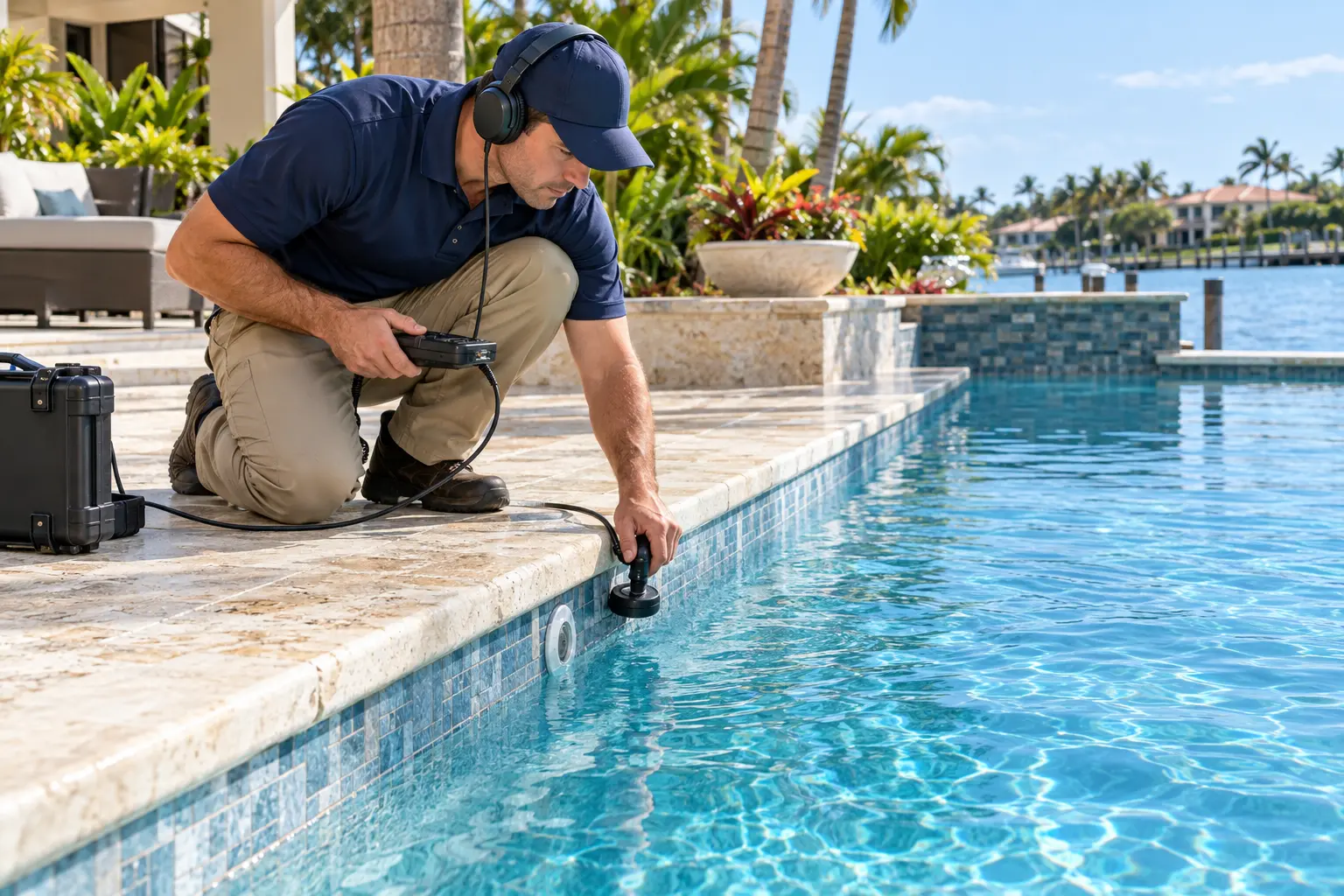
Florida pools lose water to evaporation, splash-out, and normal use, so a falling water level does not always mean there is a leak. The pattern matters. How quickly the water drops, whether it changes with the equipment running, and where the level stabilizes can help distinguish an expected condition from a problem that needs testing.
Sun Harbor Pools begins with the history of the water loss and an inspection of accessible equipment and visible pool areas. From there, isolation, pressure, acoustic, or dye testing may be used as appropriate. The purpose is to narrow the source before repair work begins and to explain the findings in language that makes sense.
What the service can include
The exact scope depends on the pool, equipment, and condition found. These are the core areas addressed during this type of service.
What to watch
One symptom does not prove a leak, but a consistent pattern can show that the pool is losing more than weather alone would explain.
The pool needs water much more often than nearby pools or continues dropping during mild weather.
Persistent moisture, softened soil, or unexplained water near equipment or the pool may deserve inspection.
Air in the returns, trouble holding prime, or loss that changes with the pump schedule can help narrow the investigation.
How the service works
We start with what you are seeing, work through the pool and system in a logical order, and explain the next step before additional work proceeds.
We review how much water is being added, when the loss occurs, and any related equipment symptoms.
Visible inspection and targeted testing help separate equipment, plumbing, and structural possibilities.
You receive a clear summary of what was found and the most practical repair path.
Where this service is available
Open a city page for local conditions, route information, and answers tailored to that area.
Related pool services
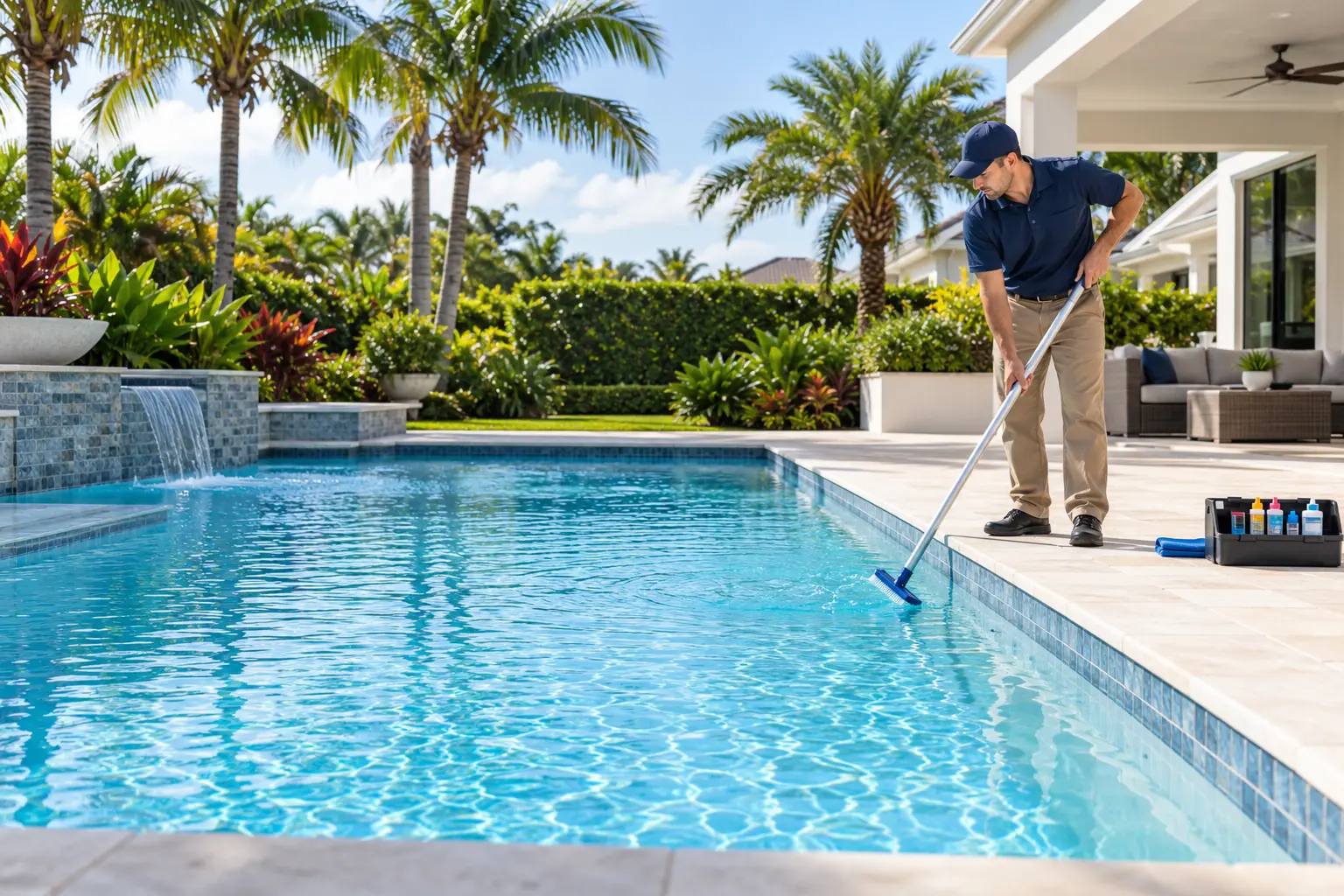
A complete weekly routine for clear water, clean surfaces, dependable circulation, and fewer pool-care surprises.
View service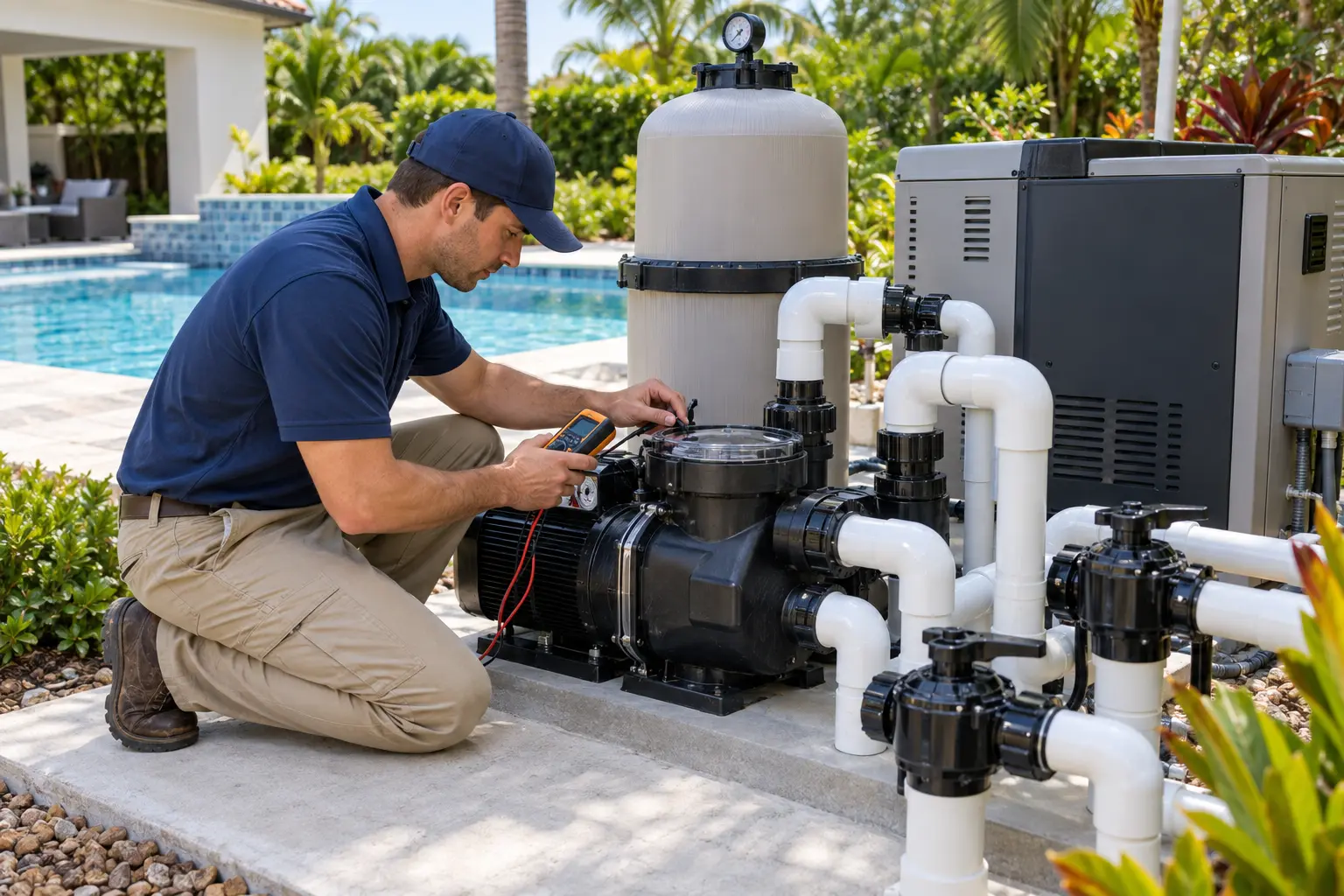
Methodical diagnostics and practical repair guidance when pumps, filters, heaters, cleaners, salt systems, or automation stop working as expected.
View service
A controlled recovery process that addresses the cause, removes the load, restores water balance, and confirms that circulation can keep up.
View serviceLeak Diagnostics FAQs
Every pool is a little different. Send the property details if your question depends on a specific system or water condition.
Weather, pool temperature, wind, and surface area all affect evaporation. A simple comparison test can provide a starting point, but repeating or unusual loss may need a professional review.
Yes. Some plumbing or equipment leaks change with system pressure or suction. Noting whether loss changes with the operating schedule can be useful diagnostic information.
Diagnosis and repair are separate scopes because the required fix depends on the source found. We explain the finding and the appropriate next step, and any repair is performed by licensed partners we coordinate and quoted before work proceeds.
Maintain a safe operating level so the pump is not damaged, unless you are given different instructions for a scheduled test. Note how much and how often water is added.
Request leak diagnostics
Share the address, pool type, and the symptoms or service you need. We will follow up about the right first visit and scheduling availability.
Call or text (772) 919-9365