Output does not match the water
Low sanitizer despite a normal-looking setting may point to water balance, flow, cell condition, or operating time.
 (772) 919-9365Get a Quote
Modern systems, carefully maintained
Complete water care and practical system support for salt cells, variable-speed pumps, automated valves, schedules, and pool-spa controls.
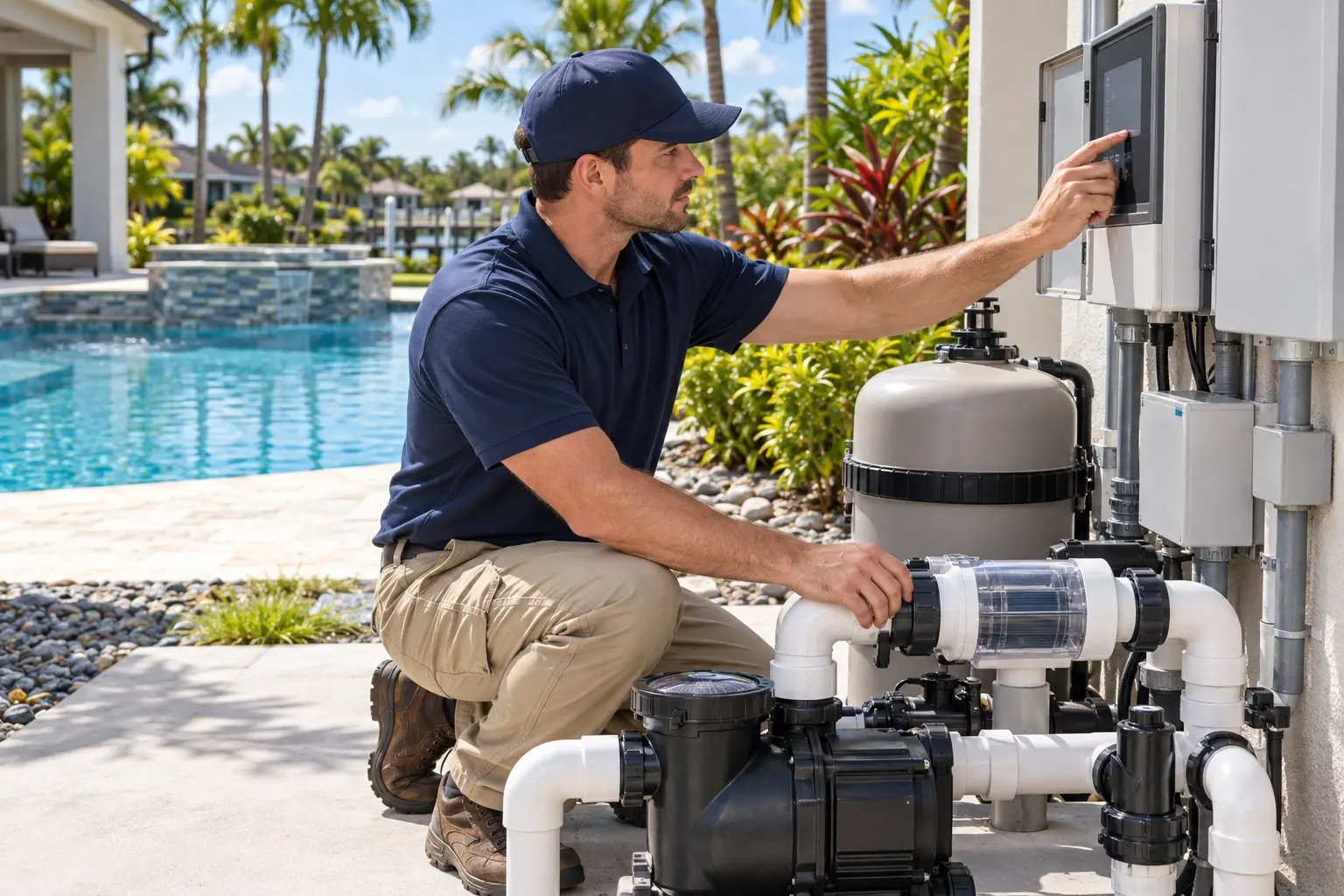
A practical service approach
A saltwater pool still needs complete testing and balancing. The salt cell creates sanitizer, but water temperature, pH, stabilizer, alkalinity, calcium balance, circulation, and cell condition all affect performance. A system can display a reassuring number while the pool chemistry or flow tells a different story.
Automation adds another layer of convenience and complexity. Pump schedules, valve positions, heater settings, spa modes, and salt output need to work together. We review the visible equipment and settings alongside the actual water condition, then explain common operating concerns and the next step when a component needs diagnosis or repair.
What the service can include
The exact scope depends on the pool, equipment, and condition found. These are the core areas addressed during this type of service.
What to watch
Saltwater and automation problems often show up as chemistry or scheduling issues before a component fails completely.
Low sanitizer despite a normal-looking setting may point to water balance, flow, cell condition, or operating time.
Unexpected spillover, heating, or circulation behavior can relate to valve position, schedules, or controller modes.
A rising pH, calcium balance, cell condition, or water temperature may contribute to visible scale.
How the service works
We start with what you are seeing, work through the pool and system in a logical order, and explain the next step before additional work proceeds.
We compare actual chemistry and circulation with the visible system settings and current complaint.
Salt cell, flow, pump schedule, valves, and controller behavior are reviewed as one system.
We explain maintenance changes, diagnostics, or repairs needed to restore dependable operation.
Where this service is available
Open a city page for local conditions, route information, and answers tailored to that area.
Related pool services
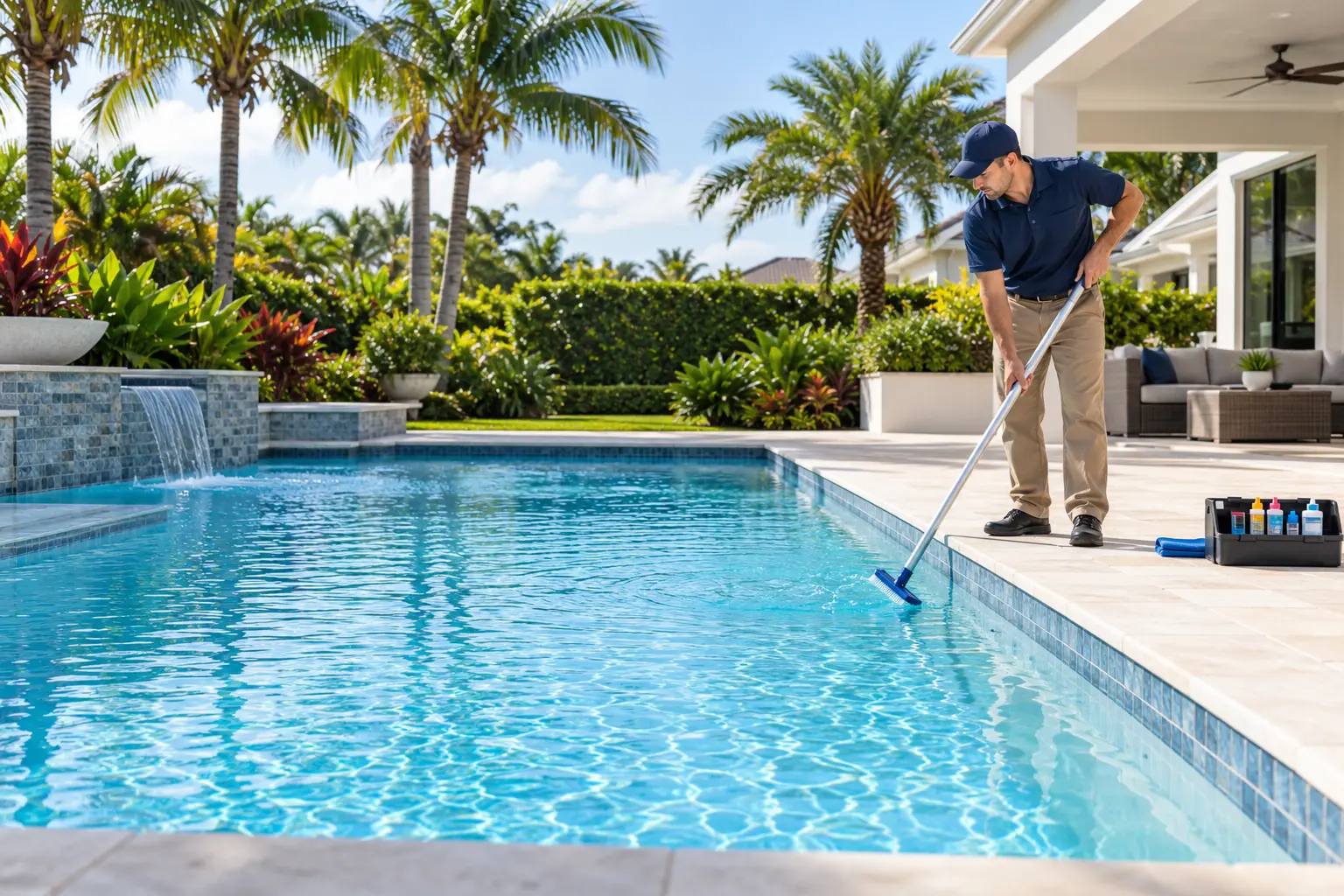
A complete weekly routine for clear water, clean surfaces, dependable circulation, and fewer pool-care surprises.
View service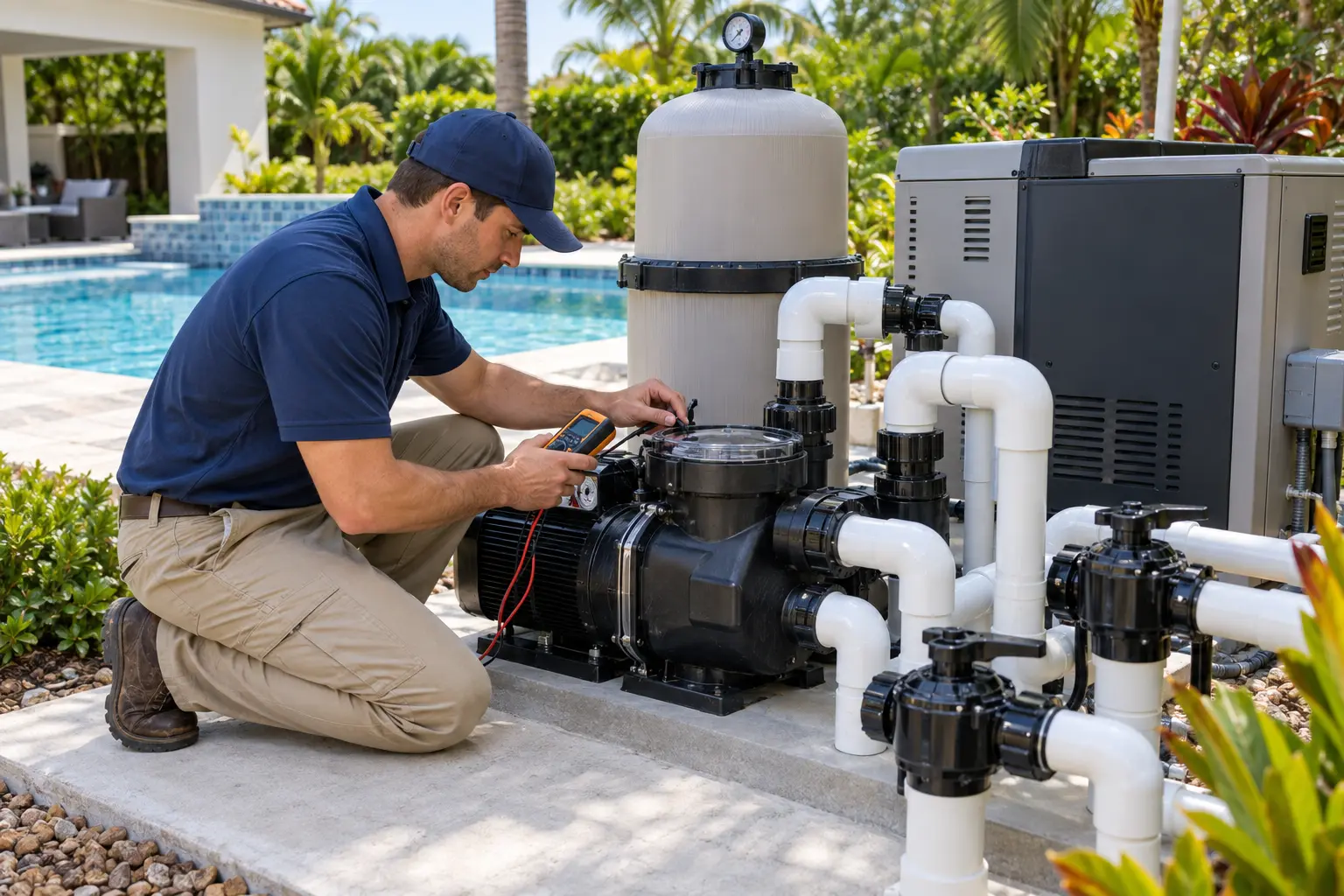
Methodical diagnostics and practical repair guidance when pumps, filters, heaters, cleaners, salt systems, or automation stop working as expected.
View service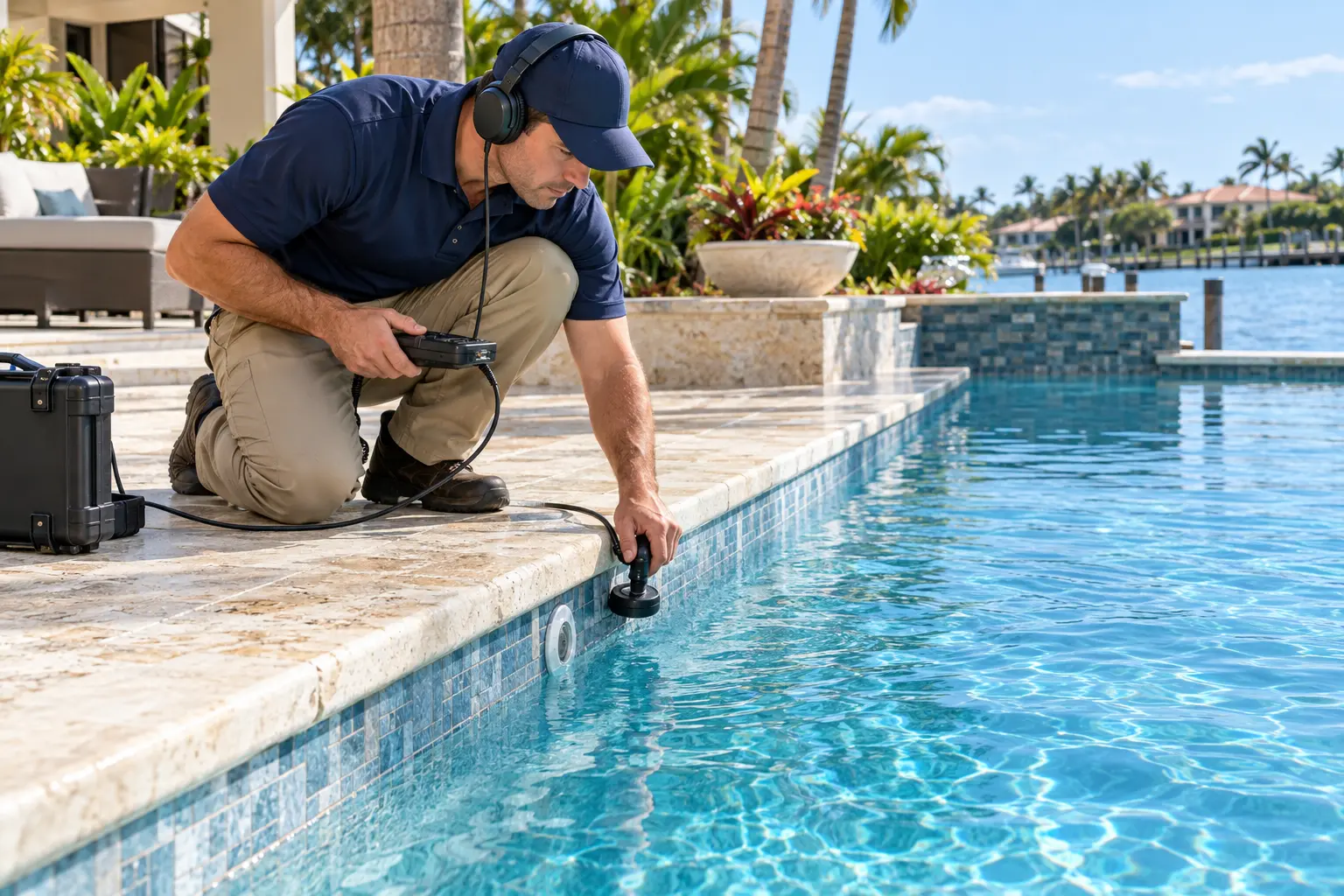
A step-by-step process for separating normal evaporation from equipment, plumbing, or structural water loss.
View serviceSaltwater & Automation FAQs
Every pool is a little different. Send the property details if your question depends on a specific system or water condition.
Yes. A salt system produces chlorine, but the sanitizer level and supporting water balance still need regular testing and adjustment.
The cause may involve water temperature, salinity, scale, flow, cell age, wiring, controller readings, or operating time. The complete system needs to be reviewed.
Yes. We review common residential schedules, modes, and valve behavior and can explain whether a setting, maintenance issue, or equipment fault is likely.
Poor water balance and coastal exposure can contribute to corrosion or scale. Correct chemistry, circulation, equipment condition, and regular observation help manage those risks.
Request saltwater & automation
Share the address, pool type, and the symptoms or service you need. We will follow up about the right first visit and scheduling availability.
Call or text (772) 919-9365