
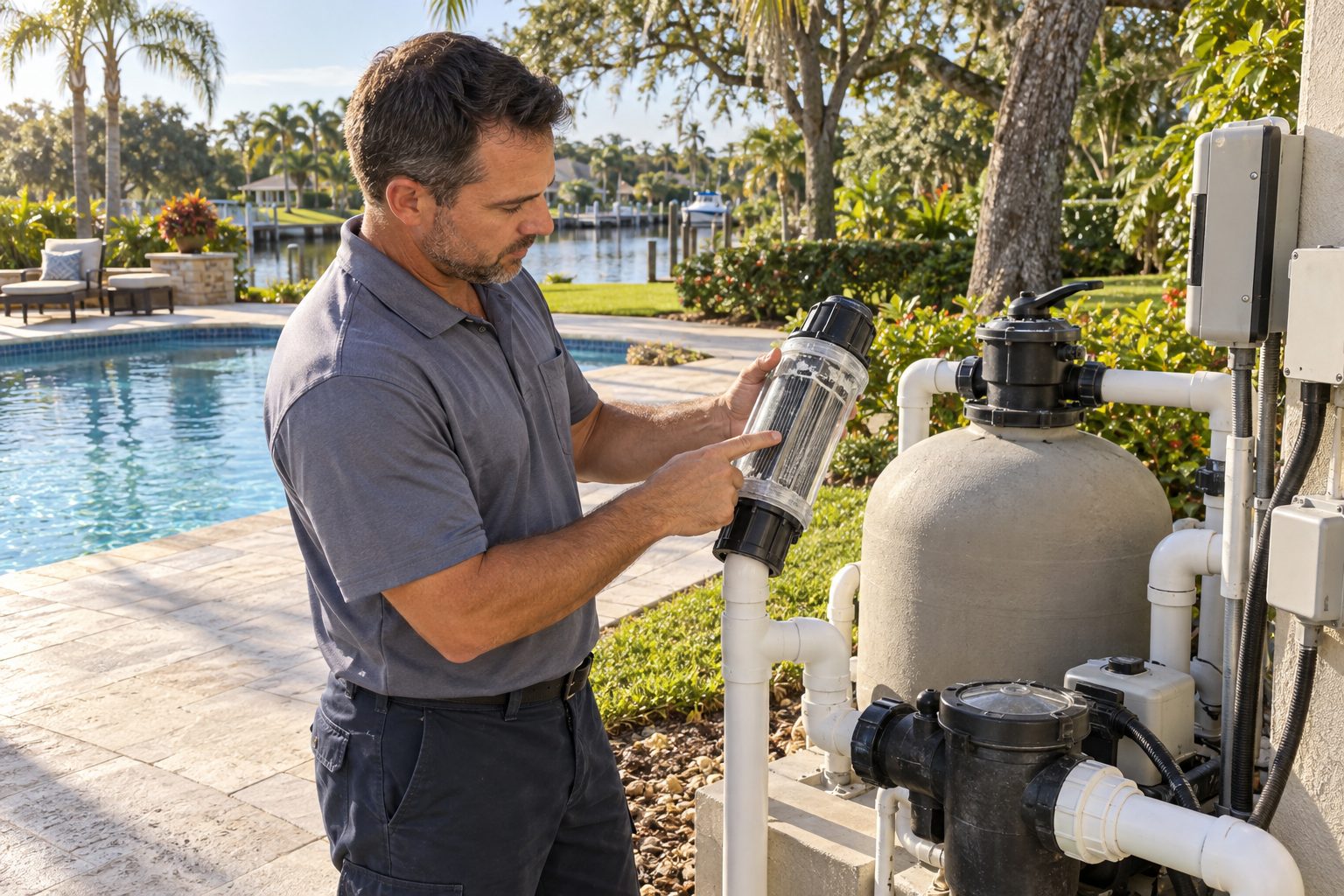
The pool changed systems, the water did not
Palm City has a lot of established homes with generous decks and pools that started life on traditional chlorine. Over time, many owners have added a salt chlorine generator, and it is a reasonable choice: no more hauling chlorine, and steadier sanitizer between visits. What a conversion does not do is reset the water. Whatever chemistry the pool had the week before the cell went in is still there the week after, and a few leftovers from the chlorine years can work against the new system.
The most common is stabilizer. Pools fed with chlorine tablets for years tend to accumulate cyanuric acid, because every tablet adds a little. A converted pool can start its salt life with stabilizer far above where it should be, which makes the chlorine the cell produces much less effective. The only practical fix for very high stabilizer is replacing some of the water, and it is better to know that up front than to chase cloudy water for months.
What we check on a converted pool
- Stabilizer level, tested first, because it decides how hard the cell has to work.
- Leftover tablet feeders. An inline or floating tablet chlorinator still in service keeps adding stabilizer. We flag it so you can decide whether to retire it.
- Salt dosing against real volume. Older pools sometimes have volume estimates that were never measured. We calculate salt from dimensions and depths, not a guess.
- Calcium and older finishes. Established plaster and pebble surfaces may have been balanced for a chlorine pool. We set calcium hardness and pH with the new cell in mind.
- Metal components. Rails, ladders, light rings, and some heater parts can be more sensitive to salt water. We note visible corrosion during routine visits so you can raise it with a specialist early.
Scale: the cell's long-term enemy
Once a converted pool settles, scale becomes the thing to manage. A salt cell works by electrolysis, and the process raises pH right at the cell plates, which is exactly where calcium likes to come out of solution. In pools where calcium runs high, from fill water, years of evaporation and top-offs, or irrigation overspray that reaches an open deck, white crust can build on the plates and cut production.
Our weekly routine keeps pH in range, watches calcium and alkalinity, and includes a regular look inside the cell. When we see buildup, a cleaning restores the plates' working surface. Cells kept in balanced water generally scale more slowly and tend to last longer than cells that live in high pH.
If something more than maintenance is needed, such as a cell or control board that fails or a conversion component that was undersized for the pool, we diagnose what we can see and coordinate repair with licensed partners, quoted before work.
What it costs
A standard screened pool starts at $170 per month for weekly service with routine chemicals included, and a saltwater system adds $20 per month. Larger Palm City pools, open decks, and water features can move that toward $195 to $250 depending on size and setup, confirmed at a free on-site evaluation. Salt cell cleaning is $60 to $75. Salt, stabilizer, and scale treatments are specialty chemicals, billed separately and discussed first. Call or text (772) 919-9365 or request a quote and mention that the pool was converted.
Frequently Asked Questions
We just converted to salt and the water got cloudy. What happened?+
The usual suspects are high stabilizer from years of tablets, high pH as the cell settles in, or calcium coming out of solution. We test all three before treating anything, so the fix matches the cause.
Do we need to drain the pool when switching to salt?+
Not always. If stabilizer and calcium test in a workable range, the existing water can stay. If stabilizer is very high, a partial drain and refill is usually the most effective correction.
Can we keep using chlorine tablets with the salt system?+
We generally advise against it, because tablets keep raising stabilizer, which reduces the effectiveness of the chlorine the cell makes. If you want to keep a feeder for backup, we can talk through the tradeoff.
Who installs the salt system?+
We do not install or plumb equipment. If you are planning a conversion, we can review the pool and the water beforehand, and installation is handled by licensed partners we coordinate, quoted before work.