
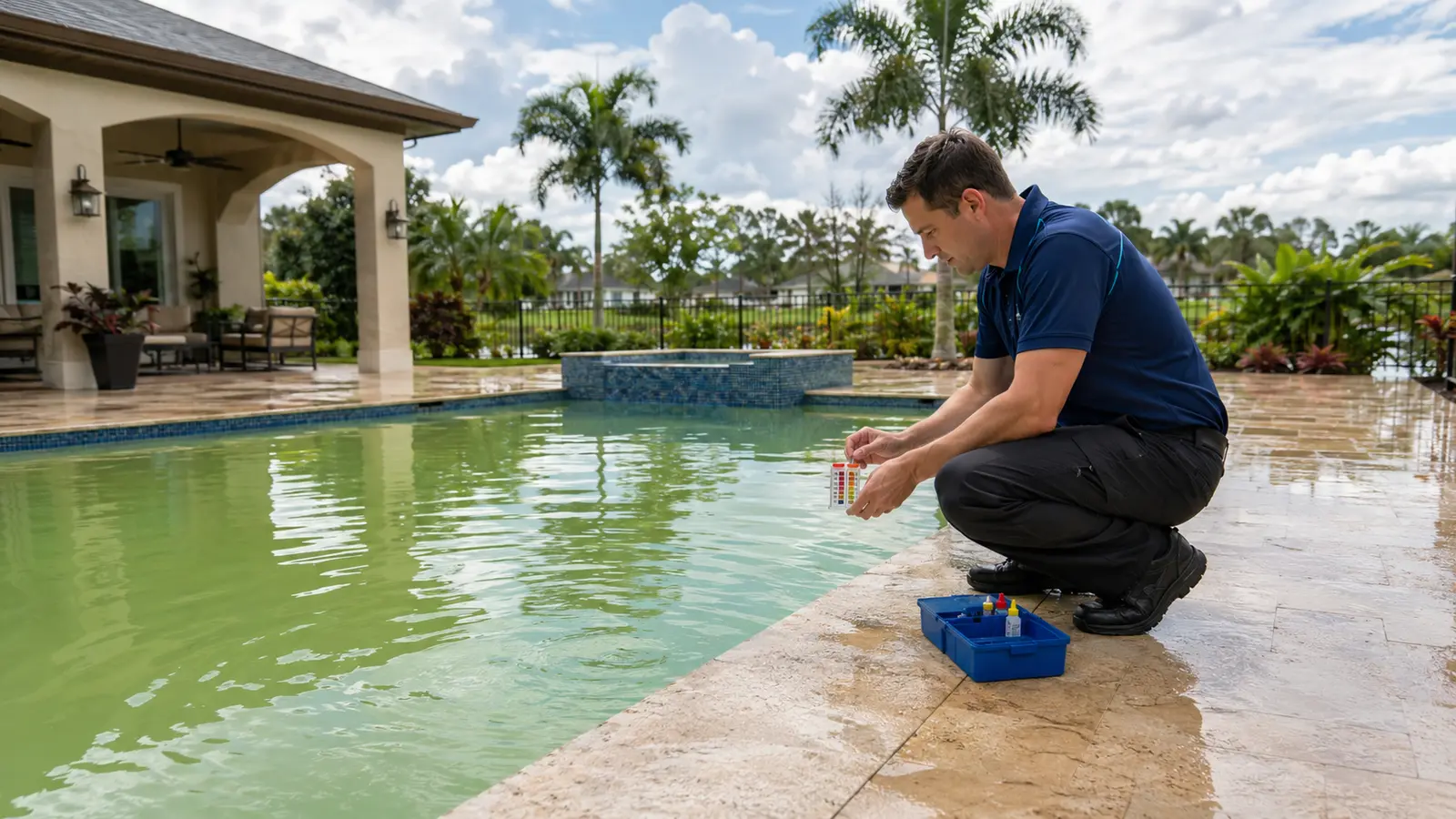
A South Florida pool can look clear before an afternoon storm and appear cloudy or green the next morning. The rain itself is only part of the story. A storm can dilute sanitizer, move leaves and soil into the water, alter pH and alkalinity, interrupt circulation and create a sudden chlorine demand that the existing treatment cannot meet.
This happens throughout Palm Beach Gardens, Jupiter, Hobe Sound, Stuart and Port St. Lucie, but it is not inevitable. A stable pool with good circulation usually handles ordinary weather better than one with a dirty filter, marginal sanitizer or an undersized service routine.
What a Florida storm does to pool water
1. It dilutes the sanitizer
Rain adds untreated water. When several inches fall or the pool overflows, treated water can be displaced and the remaining sanitizer becomes less effective. A salt system also may not be producing enough chlorine to catch up immediately, especially if its output or pump schedule was already marginal.
2. It carries organic material into the pool
Wind and runoff add leaves, pollen, insects, mulch, soil and other contaminants. Chlorine is consumed as it oxidizes that material. Even a screened enclosure admits fine debris and storm-driven rain.
3. It changes pH and alkalinity
Rainwater and runoff can move water balance in different directions depending on the storm and surrounding surfaces. The important point is that the pool’s previous chemical settings may no longer apply. Testing should come before correction.
4. It reduces effective circulation
Skimmer baskets can fill with leaves, pump baskets can clog and filters can load quickly. Power interruptions and lightning precautions may also stop the system. Chemicals cannot work evenly when water is barely moving.
5. Warm water helps algae respond quickly
Florida pool water often remains warm through storm season. Once sanitizer falls below what the pool needs, algae has favorable conditions: heat, nutrients, sunlight and surfaces where it can attach.
What to do immediately after heavy rain
- Wait until the storm and lightning have passed. Never work around an exposed pool during active lightning.
- Remove large debris. Use a net to remove leaves and branches before they sink or block circulation.
- Empty skimmer and pump baskets. Shut equipment down and follow safe procedures before opening the pump lid.
- Confirm the water level. Lower an overfilled pool only through the proper waste or drainage method. Do not drain onto a neighbor’s property or create erosion.
- Check circulation. Look for normal return flow, pump prime and filter pressure.
- Test before adding chemicals. Measure free chlorine and pH, then evaluate alkalinity and other factors as appropriate.
- Brush walls, steps and benches. This exposes early algae to sanitizer and moves material toward filtration.
- Run filtration as needed. A cloudy or recovering pool often needs extended circulation, but the filter must be monitored and cleaned when pressure rises.
If the pool is already green
Green water usually indicates algae, but the depth of color and water clarity matter. A light haze caught early is much easier to correct than a dark green pool with no visible floor. Successful recovery generally requires four things working together:
- Accurate chemistry: sanitizer must reach an effective level while pH and stabilizer are accounted for.
- Thorough brushing: algae attached to walls and steps must be disturbed.
- Continuous debris removal: dead algae and organic material need to leave the water.
- Effective filtration: the pump and filter must circulate and capture what treatment breaks down.
Simply adding “shock” without testing can waste chemicals or create a new imbalance. The required dose depends on pool volume, current chlorine, stabilizer, algae severity and product strength. A filter that is clogged or bypassing debris can keep the water cloudy even after algae is dead.
Green does not always mean algae
If the water is green but still unusually clear, especially soon after adding chlorine, dissolved metals such as copper or iron may be involved. Pollen can also create a yellow-green appearance or form lines along the floor and walls. Treating a metal issue as algae can intensify staining, while treating algae as a metal issue allows growth to continue.
Look at the complete pattern: clarity, surface texture, chlorine demand, brush response and recent chemical additions. When the cause is not obvious, professional testing is less expensive than repeatedly adding unrelated products.
When is it safe to swim again?
Do not swim until the sanitizer and pH are within appropriate operating ranges, the equipment is circulating correctly and the water is clear enough to see the floor and main drain. The CDC identifies disinfectant and pH as the first defense against germs. Poor visibility is also a serious safety problem even when the color looks only mildly green.
How to prevent the next post-storm green pool
- Keep the pool balanced before storms, not only after them.
- Maintain adequate sanitizer for the water temperature and bather load.
- Clean baskets and filters before the rainy season becomes intense.
- Trim problem landscaping and keep deck runoff out of the pool.
- Confirm that the pump schedule provides enough circulation.
- Inspect salt cells, feeders and chemical automation for proper operation.
- Arrange a post-storm visit when a property receives exceptional debris or flooding.
Weekly pool service is most valuable before the water turns green. Consistent testing, brushing and equipment observation increase the pool’s ability to absorb normal Florida weather without entering recovery mode.
Frequently asked questions
Does rainwater cause algae?
Not by itself. Rain can dilute sanitizer, add organic debris, change water balance and overwhelm circulation. Those conditions allow algae already present in the environment to multiply.
Should I shock the pool after every rain?
No. Test first and treat according to the actual condition, pool volume and product label. Light rain may require little action; a major storm may require more.
How long does green-pool recovery take?
A light early bloom may improve within one or two days. A dark green pool, heavy debris load or clogged filter can take several days.
Can I swim if the pool is slightly green?
Do not swim until chemistry is within safe ranges and the water is clear enough to see the floor and drain.